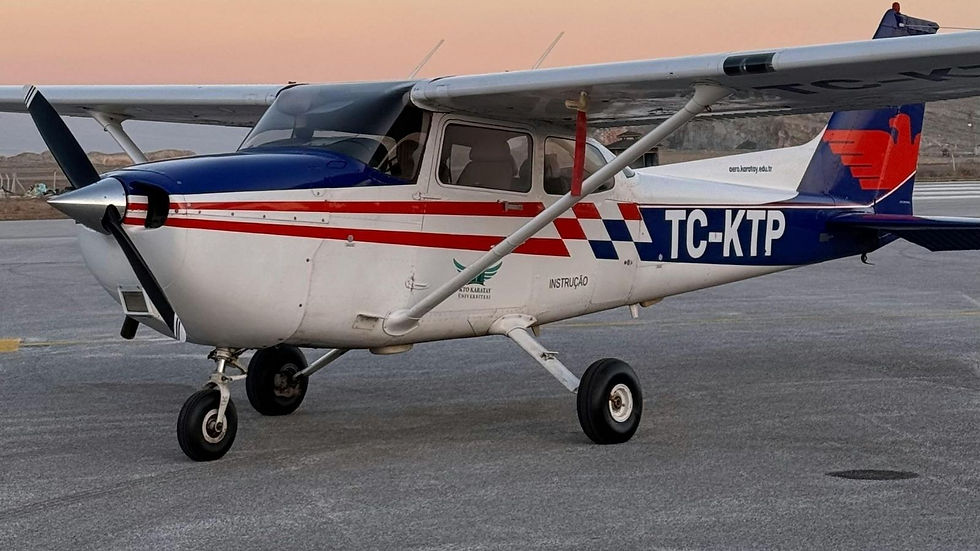
Why Does an Experienced Flight Instructor Matter in Middle Tennessee?

Picture the ramp at Smyrna on a quiet Saturday morning. A pilot with gray hair and forty years of flying walks out to a Cessna, runs a hand along the leading edge of the wing, and just looks at it for a second before pulling the fuel sample. No rush. No wasted motion. There is a whole career in that little pause.
Newer students sometimes think flight training is only about the numbers: how many hours, how many landings, how fast can I finish. Those things matter. But the thing that quietly makes you a safer, calmer pilot is harder to count. It is experience, and the good news is you are surrounded by it from your very first lesson.
What does experience actually add to flying?
Flying an airplane is not hard in the mechanical sense. Pull back, houses get smaller. Push forward, they get bigger. A motivated person can learn the basic motions in a few hours. The hard part, the part that takes time, is judgment.
Judgment is knowing which gusty crosswind is a fine learning opportunity and which one means we stay on the ground and get a coffee instead. It is reading a line of summer buildups over the Cumberland Plateau and deciding to turn around early rather than press on. It is hearing a slightly rough engine note on run up and trusting that something is off.
Anyone can learn to move the controls. Experience is knowing what to do when the day does not go according to plan.
That is what a seasoned instructor brings into the cockpit with you. Not just the ability to demonstrate a steep turn, but a deep library of situations they have already lived through, so they can help you build your own good instincts before you ever need them alone.
Why does the instructor sitting next to you matter so much?
Early in training, your instructor is your filter for the entire aviation world. They decide what to show you, when to push, and when to pull back. A thoughtful, experienced instructor does a few things that are easy to overlook.
They catch the small mistake before it becomes a habit, because they have seen that habit grow before.
They explain the why behind a procedure, not just the steps, so it sticks.
They stay calm when the airplane does something unexpected, and calm is contagious.
They know when you are actually ready for the next thing, not just when you want to be.
We have all had the lesson where a student is quietly convinced they are hopeless at landings. An experienced instructor recognizes that moment, because they have watched a hundred students break through it. They know it is normal. They know it passes. And they can tell you that with the kind of certainty that only comes from having been there.
Experience does not mean the most hours on paper
Here is an honest point. A brand new certified flight instructor can be a wonderful teacher. Many of them are sharp, patient, and bring fresh energy because they just learned all of this themselves. What matters is not any single number in a logbook. It is the combination of real flying experience, a genuine love of teaching, and the humility to keep learning.
When you are choosing where to train, pay less attention to any one statistic and more to how the instructor makes you feel in the airplane. Do they explain things clearly? Do they answer your questions without making you feel small? Do you leave a lesson understanding more than when you walked in? That is the real measure.
How do experienced pilots make flying safer?
Aviation has always passed knowledge down from one generation to the next. The hangar conversation, the quick tip on the ramp, the story that ends with "and that is why I always check the fuel caps myself." None of that shows up in a textbook, but it is some of the most valuable learning you will ever get.
Older and more experienced pilots carry a kind of institutional memory. They remember mistakes, theirs and other people's, and they remember what those mistakes cost. When one of them tells you to respect density altitude on a hot Tennessee afternoon, or to always have an out when the weather is marginal, they are handing you a lesson they may have paid dearly to learn.
Good decision making is a skill you can inherit, if you are willing to listen.
This is why we love that general aviation keeps experienced pilots involved. A pilot who has flown for decades and then becomes an instructor, or simply mentors the younger folks around the field, is a gift to everyone who comes after. Experience does not lose its value with age. If anything, it gets richer.
How can a student actually learn from all that experience?
You do not have to wait to earn it all yourself. Some of it you can borrow if you show up curious. Here is how to make the most of the experience around you.
Ask questions, even the ones you think are dumb. The pilot who has seen it all usually loves explaining it. Your questions are not a bother. They are a compliment.
Stick around the airport. Some of the best learning happens on the ramp and in the hangar, not just in the air. Listen to the debrief, the hangar talk, the stories.
Debrief every flight honestly. Talk through what went well and what did not. An experienced instructor will help you see patterns you cannot see yet.
Read accident reports with respect, not fear. They are the hard earned lessons of other pilots. Reframed the right way, they teach you how to make better decisions.
When something in aviation goes wrong, the point is never to dwell on the tragedy. The point is to ask, quietly and seriously, what can I take from this to fly safer tomorrow. That mindset is the heart of good training, and it is something the most experienced pilots do almost automatically.
Does experience still matter in the age of glass cockpits?
Technology in small airplanes keeps getting better. Moving maps, traffic alerts, synthetic vision, autopilots that would have seemed like science fiction a generation ago. All of it makes flying more accessible, and that is a wonderful thing.
But the screens do not make decisions for you. They give you better information. What you do with that information still comes down to judgment, and judgment still comes from experience. An experienced pilot uses the new tools to fly smarter, while never forgetting how to fly the airplane if a screen goes dark.
That blend is exactly what we try to teach. We want you comfortable with modern avionics and solid on the fundamentals, so you are never dependent on any one thing. The gadgets change. The value of good hands and good judgment does not.
What does this mean for you, starting out?
If you are standing at the beginning of this, maybe wondering whether you are too old, too new, or too inexperienced to belong at a flight school, here is the truth. Everyone starts with an empty logbook. Every single pilot you admire was once a nervous beginner who could not hold altitude to save their life.
The difference between them and someone who never flies is not talent. It is that they kept showing up, kept asking questions, and kept learning from the people ahead of them on the path.
So come out to Smyrna, meet the folks around the field, and listen to the ones who have been doing this a long time. Soak up what they know. One day, maybe sooner than you think, you will be the experienced one sharing a tip on the ramp, and someone just starting out will be grateful you did.