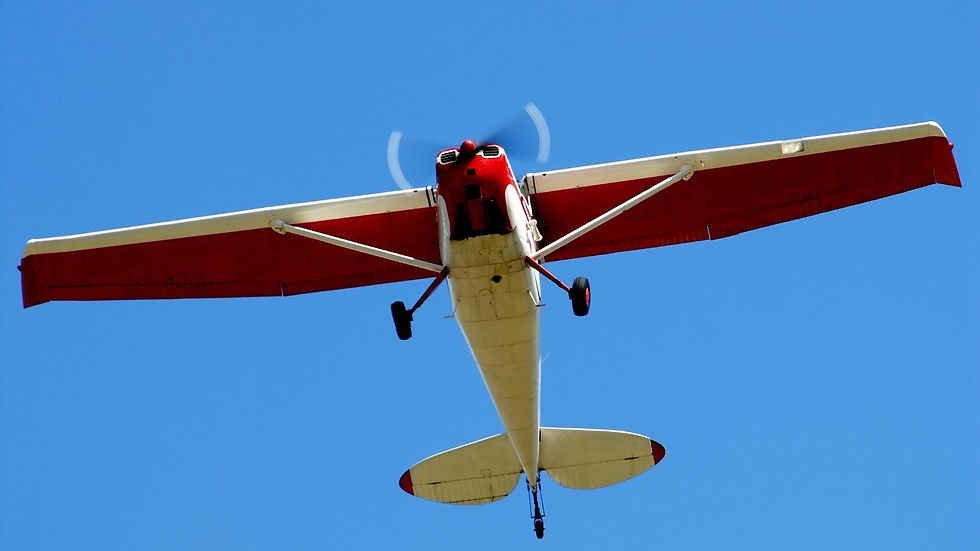
Why Are Crisp Mornings Some of the Best Flying You Will Ever Do in Middle Tennessee?

Picture this. A pilot climbs out one cold, clear morning and levels off a few thousand feet up, and the whole city is laid out below like a map that someone finally held still. We saw a photo like that recently, taken over the New York City area on a crisp morning, with the rivers and streets and bridges sharp enough to count. It is the kind of view that makes non pilots say wow and makes pilots quietly grin, because we know a secret.
That kind of morning is not just pretty. It is some of the best flying weather there is. And you do not have to go to New York to find it. We get mornings exactly like that right here over Smyrna and the rolling hills of Middle Tennessee, and if you are learning to fly, they are worth setting an early alarm for.
Here is why cool, clear mornings are so good, and why we love scheduling lessons in that window.
Why is the air so smooth early in the morning?
If you have only ever flown in the back of an airliner, you might think bumps are just part of flying. In a small training airplane, you feel the air much more directly, and the time of day changes everything.
During the day, the sun heats the ground unevenly. Parking lots, fields, and forests all warm up at different rates, and that warm air rises in invisible columns we call thermals. On a hot Tennessee afternoon in July, those rising pockets of air bounce the airplane around. It is not dangerous, but it can be tiring, and it makes it harder for a new student to hold a heading and altitude steady.
Early in the morning, before the sun has had a chance to cook the ground, the air is calm and even. The airplane sits in it like a boat on a glassy lake.
Smooth morning air is the difference between fighting the airplane and flying it.
For a student practicing steep turns, slow flight, or those first nervous landings, smooth air lets you focus on the lesson instead of the chop. You learn faster when the airplane is not arguing with you.
Why can you see so much farther when it is cold?
That razor sharp view in the photo is not an accident either. Cool, dry air holds less haze and moisture, so visibility on a crisp morning can be stunning. On the right day you can level off over Smyrna and pick out downtown Nashville, the bend of the Cumberland River, and the long green ridges running off toward the Cumberland Plateau.
Good visibility matters for more than the scenery. A big part of flying safely is seeing and avoiding other airplanes, and spotting landmarks to navigate. When the air is clear, both of those get easier.
You can identify checkpoints from farther away, which makes your first cross country flights far less stressful.
You can see traffic in the pattern and in the practice area sooner.
You build a mental picture of the whole area, which helps everything click.
There is a confidence that comes from being able to look out and simply know where you are. Crisp mornings hand you that for free.
Does cold weather actually make the airplane fly better?
It really does, and this is one of our favorite things to teach because it surprises people.
Airplanes fly on air, and cold air is denser than warm air. More air molecules packed into the same space means the wings make more lift, the propeller bites harder, and the engine breathes better. The whole airplane performs like it had a good night of sleep.
We talk about this with students using the idea of density altitude, which is basically how high the airplane thinks it is based on temperature and pressure. On a hot, humid summer afternoon, a field near sea level can perform like it is thousands of feet higher, with longer takeoff rolls and sluggish climbs. On a cold winter morning, the opposite happens.
On a cold morning the airplane leaps off the runway and climbs like it means it.
That eager performance is a gift, but it is also a teaching moment. Learning how temperature changes what your airplane can do is a core safety skill. A pilot who understands density altitude knows that the same runway, the same airplane, and the same weight can give very different results in August versus December. That awareness is exactly the kind of good decision making that keeps pilots safe for a lifetime.
What should I watch out for on those cold clear days?
A beautiful morning is not a free pass. Part of becoming a pilot is learning that every kind of good weather still asks you to pay attention.
Frost on the wings
Even a thin layer of frost can disrupt the smooth airflow over the wing and seriously hurt lift. We never fly with frost on the airplane. Part of a cold morning preflight is making sure every surface is clean, and that is a habit worth building early.
Fog and low clouds
Those same calm, moist conditions that make smooth air can also form fog around dawn, especially near rivers and low ground. Sometimes the trick is simply waiting an hour for the sun to burn it off. Learning to read that, and to be patient, is part of the craft.
Cold hands and cold cabins
The cabin takes a few minutes to warm up, and a cold pilot is a distracted pilot. Dress in layers. Little comforts help you concentrate on flying.
None of this is meant to scare you. It is the opposite. When you understand why a morning is good and what to check before you go, the whole experience gets calmer and more enjoyable. Knowledge is what turns nervous into confident.
Is early morning a good time for lessons if I have a job?
Honestly, it can be one of the best times, and not only because of the weather. If you work a standard day, an early lesson can get you flying before the office even opens. You show up to work having already done something most people only dream about.
Flying consistently is the single biggest thing that moves your training along. Students who fly regularly tend to retain more from one lesson to the next and spend less time reviewing. A steady early morning slot a couple of times a week, when the air is smooth and your mind is fresh, is a wonderful rhythm. Keep in mind that winter mornings are short on daylight and some days the weather simply will not cooperate, so a little flexibility goes a long way.
What does all of this add up to?
The photo over New York got us thinking, but you do not need a famous skyline to feel what that pilot felt. You need a cool morning, a clean airplane, and the willingness to get up a little early. From a few thousand feet over Middle Tennessee, with Nashville glinting to the northwest and the hills rolling away in every direction, our little corner of the world looks pretty spectacular too.
If you have been thinking about learning to fly, let the next crisp morning be your nudge. Come see what your home looks like when someone finally holds the map still. We would love to show you.