
Am I Too Old to Learn to Fly? Starting (or Restarting) in Middle Tennessee
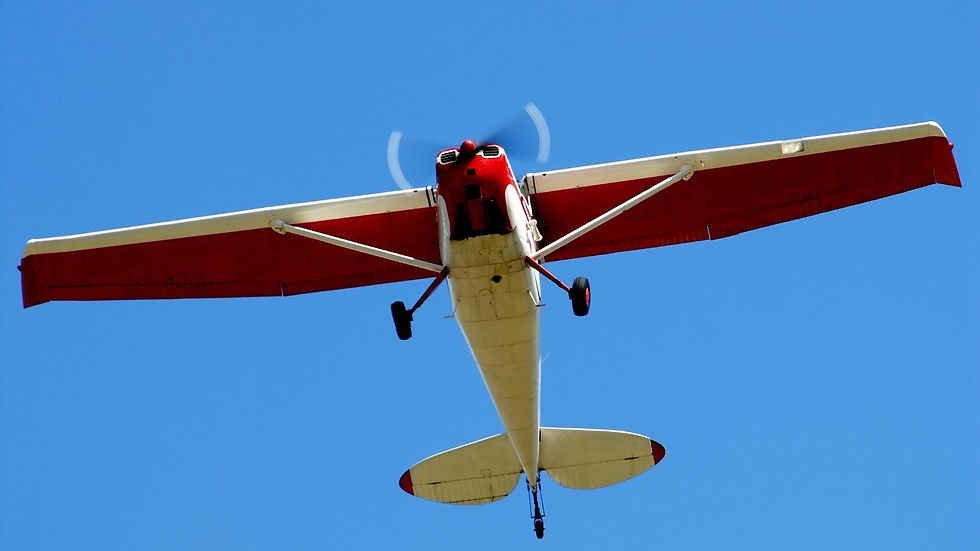
We read a story this week about a woman who first learned to fly a Russian aerobatic airplane as a teenager, set the dream aside for decades, and then found her way back into the cockpit years later. The details were exotic. The feeling behind it was not.
We hear a version of that feeling almost every week out here at Smyrna. Someone walks up to the ramp, watches a little Cessna taxi by, and says some variation of the same sentence: I always wanted to do that, but I think I'm too old now.
So let's talk about that honestly, because it is probably the single most common thing standing between a person and the left seat. And most of the time, it just isn't true.
Am I actually too old to start?
The short version: for recreational and most private flying, there is no upper age limit to earn a pilot certificate. People begin training in their forties, fifties, sixties, and beyond. We have taught career changers, empty nesters, and folks who finally retired and decided this was the year.
What matters far more than your age is a short list of practical things.
Can you hold a current medical certificate, or qualify under the lighter requirements that exist for certain kinds of flying?
Can you commit to flying often enough that each lesson builds on the last?
Are you willing to study on the ground, not just fly on the weekends?
None of those are about birthdays. They are about health, time, and follow through.
The thing that ends most flying dreams isn't age. It's the quiet decision to never ask the question.
If you are chasing an airline career, timing does matter more, because airlines have a mandatory retirement age and you want runway to build hours and seniority. But even there, people switch into aviation in their thirties and forties and build real careers. If flying for fun is the goal, the clock is far more forgiving than you think.
What about the medical certificate?
This is the piece that worries older students most, and we understand why. The honest answer is that a lot of common conditions are workable, and many people who assume they will be disqualified are not.
A few things to know in plain terms:
For many kinds of flying, you will need a medical certificate issued by an FAA authorized doctor called an aviation medical examiner, or AME.
Some conditions that need extra paperwork can still be approved, they just take time and the right documentation.
There are also lighter paths for certain recreational flying that reduce the medical hurdle, depending on your situation.
Before you spend a dollar on lessons, it is worth talking to an AME about your specific history. We would rather you get that conversation out of the way early than wonder about it for months. Medical rules and categories change over time, so confirm the current requirements with your AME and your instructor rather than relying on something a buddy told you years ago.
I flew years ago and stopped. Can I pick it back up?
Yes, and it is one of the most satisfying kinds of flying to teach. Returning students fall into two rough groups, and both are welcome.
You had some training but never finished
Maybe life got busy at twenty hours. Maybe you soloed and then moved for a job. Good news: those hours and that muscle memory are not gone. A lot comes back faster than you expect once your hands are back on the controls.
We usually start with a few flights to knock the rust off and see where you really are. Procedures change, airspace changes, avionics change, so part of the work is updating you to how things are done now. The stick and rudder part often returns quicker than the paperwork and radio habits.
You earned a certificate but haven't flown in years
A pilot certificate does not expire. What lapses is your currency and your recency, and the law requires a flight review with an instructor to act as pilot in command again. We treat that review as a chance to rebuild confidence, not a test to trap you. Most returning pilots are grinning by the end of the first flight.
Does learning later make it harder?
Different, not harder. Teenagers tend to pick up the raw hand flying quickly and sometimes rush the judgment. Adult students usually bring the opposite. You take it seriously, you ask good questions, and you already understand things like weather patterns, risk, and planning from decades of life.
Where adults sometimes struggle is giving themselves permission to be a beginner again. If you have been competent at your job for thirty years, being clumsy on the radio for the first time can sting. That feeling fades. Every single pilot flying today was once fumbling the checklist and talking too fast on the radio.
You do not need to be a natural. You need to be consistent, and willing to be a student again.
How much should I fly to actually make progress?
This is the real lever, and it matters more as an adult with a full calendar. Flying once a month feels relaxing, but you spend half of each lesson relearning the last one. That gets expensive and discouraging.
We generally encourage students to fly two or three times a week if they can swing it, even if the lessons are shorter. Frequency beats duration. The brain holds onto a skill much better when the next repetition comes soon.
A realistic rhythm for a working adult in Middle Tennessee might look like one weekday evening and one weekend morning, plus ground study at home in between. The actual flight hours it takes to reach a private pilot certificate vary a lot from person to person based on frequency, aptitude, and weather, so think in terms of steady progress rather than a magic number.
Why is Middle Tennessee a good place to learn?
We are a little biased, but this really is a friendly region to train in.
Smyrna has a solid airport with real runways and a control tower, so you learn to work with ATC early, which builds confidence fast.
Our weather gives you four honest seasons, enough variety to become a capable pilot without months of being grounded.
The practice areas and the mix of nearby airports give you quiet spots to learn maneuvers and busier fields to sharpen your radio and pattern work.
A short cross country flight from here opens up ridges, rivers, and small towns that make for genuinely beautiful first adventures.
Learning in this kind of environment means that by the time you earn your certificate, you are ready to actually use it, not just fly laps around one quiet strip.
So what is the honest bottom line?
The person in that story did not have some rare gift that the rest of us lack. She had a dream, set it down, and had the courage to pick it back up. That is a path open to far more people than believe it.
If you have been telling yourself the window closed, we would gently push back. The best way to find out where you really stand is to come fly one lesson and feel the airplane respond to your hands. Age is rarely the thing in the way. Usually it is just the asking.


