What Do Aviation Quotes Actually Teach a Student Pilot?

You have probably seen them framed in a hangar or printed on a coffee mug. Short, punchy sayings about flying that sound good and look nice on a wall. What most people do not realize is that a lot of those lines started as hard won lessons, passed from one pilot to the next until they got polished down to a single sentence.
We think about a few of them almost every week out here at Smyrna. Not because they are clever, but because they are true, and because they quietly shape how we teach. So let us walk through some of the ones that have stuck with us, and what each one really means when you are sitting in the left seat of a small airplane over Middle Tennessee.
Why do pilots love quotes so much anyway?
Flying is a skill you learn with your hands, but the decisions that keep you safe happen in your head, often before the engine even starts. A good quote is a memory aid. It packages a complicated idea into something you can recall in half a second when you need it.
Think of it like a checklist for your judgment. A written checklist keeps you from forgetting the flaps. A well chosen saying keeps you from forgetting the bigger picture when the weather is marginal and you really want to get home.
Flying is a skill you learn with your hands, but the decisions that keep you safe happen in your head.
That is why these lines get repeated. They are not decoration. They are the compressed experience of everyone who flew before us.
What does 'a superior pilot uses superior judgment' really mean?
The full version goes something like this: a superior pilot uses superior judgment to avoid situations that might require superior skill. Read it twice. It is one of the most important ideas in all of flight training.
New students often assume that being a good pilot is mostly about having sharp reflexes and smooth hands. Those things matter. But the pilots we admire most are the ones who rarely get into a tight spot in the first place, because they made good calls early.
How it shows up in training
Here in Tennessee we get a lot of days with a summer haze layer, pop up afternoon storms, and gusty spring winds. A student who is still building skill has every reason to look at a marginal forecast and simply not go. That is not weakness. That is the exact judgment the quote is pointing at.
The best decision a pilot makes is often the flight they choose not to take. We tell every student that canceling a lesson because the conditions are beyond your current ability is a passing grade, not a failing one.
Is it true that 'takeoffs are optional, landings are mandatory'?
This one gets a laugh the first time you hear it, and then it never leaves you. Once your wheels leave the pavement at Smyrna, you have committed to coming back down somewhere. That simple fact reframes everything.
It means the questions you should be asking happen on the ground, before the takeoff roll:
Is the weather good enough for where I am going and when I will get back?
Do I have enough fuel, with a real reserve, not a hopeful one?
Am I current, rested, and healthy enough to fly today?
If my plan falls apart, what is my out?
Because takeoff is the one truly optional part, it is also the one place where saying no costs you nothing but a little disappointment. We would much rather see a student scrub a flight in the run up area than press on and wish they had not.
What about 'there are old pilots and bold pilots, but no old bold pilots'?
This is probably the most famous aviation saying of them all, and it is famous because it is honest. Aviation rewards patience and steady habits. It punishes showing off.
You do not have to be timid to be safe. We want our students to be confident and to genuinely enjoy the airplane. But there is a difference between confidence and pushing limits to prove something. The pilots who fly for decades are the ones who treated every flight, even the routine hop around the practice area, with respect.
Why this matters most right after your checkride
There is a stretch after a new pilot earns a certificate where confidence can outrun experience. You have the certificate in your wallet, the world feels open, and it is tempting to take on more than you are truly ready for. This is exactly where that old saying earns its keep. Stretch your abilities deliberately and gradually, with an instructor's help, rather than all at once on a whim.
You do not have to be timid to be safe, but you do have to be humble.
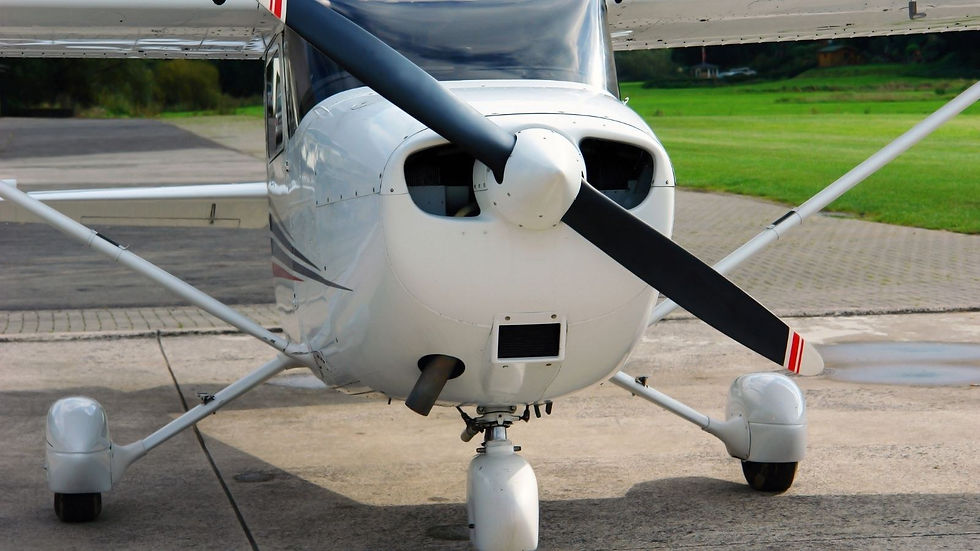
Does 'the propeller is just a big fan to keep the pilot cool' teach anything?
The joke finishes: you can tell, because when it stops, the pilot starts sweating. It is a laugh line, but underneath it is a serious point about respecting the systems that keep you flying, and about training for the day something quits.
A huge part of what we do in the airplane is practicing for problems that will probably never happen. Simulated engine failures. Diverting to a different airport. Handling an electrical issue calmly. We do this so that if the fan really does go quiet someday, your hands already know what to do while your brain catches up.
Good training turns a scary moment into a procedure you have already rehearsed. That is the whole idea. The quote makes you smile, and then it reminds you why we drill the emergency stuff until it is boring.
How should a student actually use these sayings?
Do not just collect them. Attach each one to a real moment in your own flying. That is when a quote stops being a decoration and becomes a tool.
Here is a simple way to make them useful:
Pick one that speaks to you and write it on the cover of your logbook.
When you debrief a lesson, ask yourself which saying applied that day.
Before a flight, use one as a gut check. If 'takeoffs are optional' makes you pause about today's weather, listen to that pause.
Over time these lines become part of how you think in the cockpit. That is exactly how they were meant to work, handed down pilot to pilot, until the wisdom is yours too.
The real inspiration behind the words
What we love about aviation quotes is not the poetry, though some of them are genuinely beautiful. It is that they connect you to a long line of people who flew, learned, and cared enough to pass the lesson along. When you climb into a trainer here in Smyrna, you are joining that line.
The romance of flight is real. The first time the Tennessee countryside opens up beneath you, or you catch the sun over the ridgelines heading east, you will understand why people spend a lifetime chasing this feeling. But the words that last are the ones that keep you around long enough to keep enjoying it.
So learn the skills. Respect the judgment. And when one of these old sayings finally clicks for you in the airplane, you will know you are becoming the kind of pilot other pilots trust. Come fly with us sometime and find out which one becomes yours.