
Is It Ever Too Late to Learn to Fly in Middle Tennessee?
- 2 minutes ago
- 5 min read
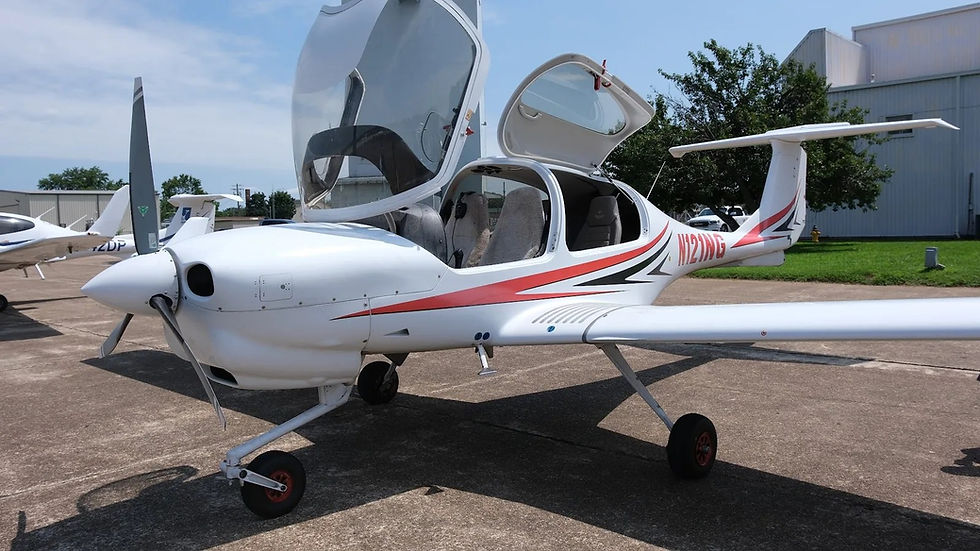
Almost every pilot we teach can point to the exact moment the bug bit them. For some it was a grandfather's Cessna. For others it was pressing their nose to a fence at a small airport, watching a big radial engine cough to life and rumble down the runway.
We read a story recently about a man who fell in love with airplanes as a boy, watching old airliners come and go at his hometown field. Decades later he found himself flying that very same type of aircraft, from the left seat, back to the airport where it all started. It is a wonderful story. But the part that stuck with us was not the airplane. It was the gap. The years between the dream and the doing.
A lot of people carry that gap around. Maybe you are one of them. So let us talk honestly about it.
Am I too old to start flight training?
Short answer: almost certainly not.
There is no upper age limit to earn a private pilot certificate. We have taught people in their teens and people well into retirement, and everyone in between. The career changer who finally has the time and the means. The weekend hobbyist who always wondered. The parent who got hooked bringing a kid out to the airport.
The dream does not expire. The only thing that changes is when you decide to act on it.
What matters far more than age is consistency. A motivated student who flies regularly will make steady progress regardless of the number of candles on the birthday cake. If anything, older students often bring patience, discipline, and good judgment to the cockpit, and those are exactly the traits that make a safe pilot.
What is the very first step?
The first step is smaller and less intimidating than most people expect. It is called a discovery flight.
You come out to Smyrna, we do a real preflight walkaround together, and then you actually fly the airplane. Hands on the controls, over the green hills and lakes of Middle Tennessee. We handle the radio and the tricky parts. You get to feel what it is like when the airplane leaves the ground and answers to your inputs.
People climb out of that first flight grinning, a little quiet, sometimes a little emotional. That kid at the fence is still in there. A discovery flight is how you let him out.
What you actually do on that first flight
Walk around the airplane and learn what we are checking and why
Get settled in the left seat, the pilot's seat
Take the controls in cruise and try some gentle turns and climbs
See the practice area and the traffic pattern from the air
Ask every question you have, because there are no dumb ones
You do not need to know anything going in. You do not need to commit to a thing afterward. It is simply the honest way to find out whether this is for you.
Do I need a medical certificate before I can start?
You do not need one to take a discovery flight or to begin training. You will need one before you solo, so it is smart to sort it out early.
Most students get what is called a third class medical from an FAA authorized doctor called an aviation medical examiner. For a lot of everyday flying there is also a path called BasicMed once you have held a medical before. The rules and eligibility here do change over time, and personal health situations vary, so the right move is to talk with an aviation medical examiner and confirm current requirements before you spend money on anything.
If you have a health condition you are worried about, ask before you assume it disqualifies you. More people are able to fly than think they can.
How long does earning a private pilot certificate really take?
Here is where honesty matters more than a shiny number.
The FAA sets minimum flight hours for the private pilot certificate, but very few people finish at the bare minimum. The realistic total for most students runs higher, and where you land depends almost entirely on one thing: how often you fly.
The student who flies twice a week
This person makes real, visible progress. Each lesson builds on the last while the skills are still fresh. They tend to move through training efficiently and spend less overall because they are not paying to relearn things they forgot.
The student who flies twice a month
This person still gets there, and there is nothing wrong with going at the pace your life allows. But a bigger share of each lesson gets spent knocking rust off, so the calendar and the total cost both stretch out.
The lesson we share with every new student is the same: frequency is the single biggest lever you control. If you can protect two flights a week, protect them.
What does it cost, and how do people pay for it?
We will not quote you a magic number, because prices move with fuel, aircraft, and how quickly you progress, and anyone who gives you an exact total on day one is guessing. What we can tell you is how the cost is built so there are no surprises.
Your training bill is mostly the airplane and the instructor's time, plus some ground study, testing fees, and gear like a headset and a few books. You pay as you go, lesson by lesson, rather than one giant sum up front.
People fund it all kinds of ways. Some budget a set amount each month. Some fly a little slower during busy seasons and pick up the pace when they can. The key is to keep the flow steady enough that you are building skills faster than you are forgetting them. Slow and steady beats stop and start, every time.
Is the dream really worth chasing?
Think about that man flying back into his hometown airport, decades after watching those airplanes as a boy. The thing is, he did not get there because he had a dream. Plenty of people have the dream. He got there because at some point he took the first real step, and then the next one.
That is the honest secret of learning to fly. It is not one heroic leap. It is a walkaround checklist, a first solo, a cross country to a field you have never seen, a checkride, and a hundred small wins in between. Middle Tennessee is a genuinely good place to string those wins together, with room to practice, friendly fields nearby, and weather that gives you plenty of flyable days across the year.
The gap between the dream and the doing is not made of talent or luck. It is made of first steps that never got taken.
So if you have carried that spark around for years, know this. The kid at the fence was right. And the left seat is closer than it feels. When you are ready to find out what it is like, come fly with us at Smyrna and see for yourself.


